
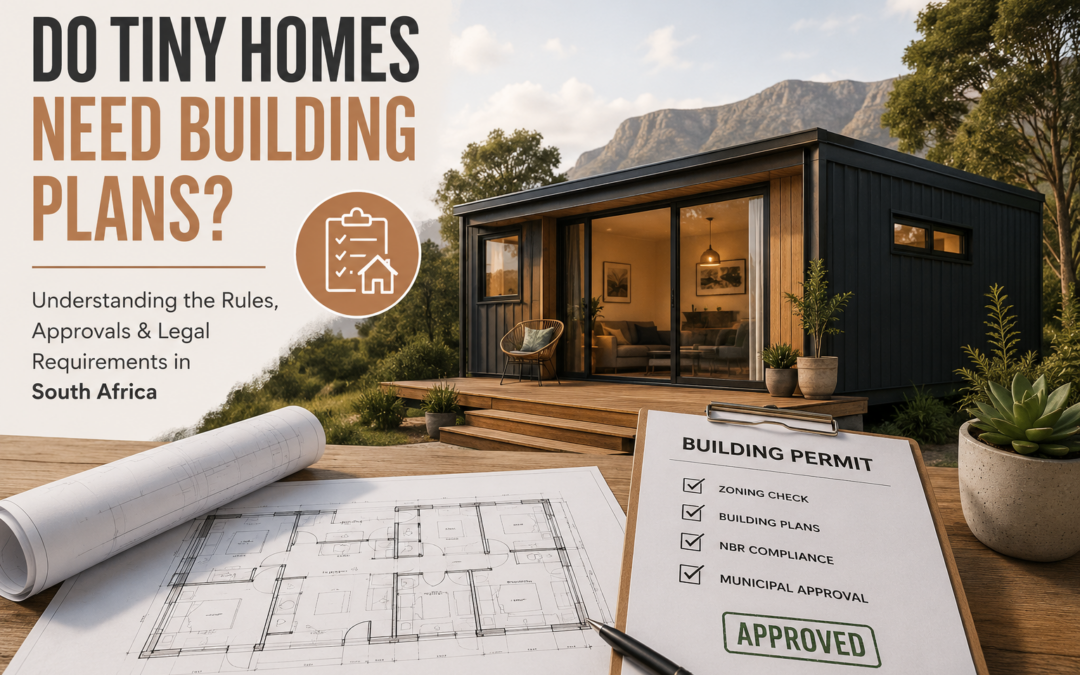
Do Tiny Homes Need Building Plans in South Africa?
Understanding Tiny Home Approvals, Zoning and Legal Requirements
One of the most common questions we receive at Tinyhome Africa is:
“Do tiny homes need building plans?”
The short answer is: In most cases, yes.
However, the answer depends on several factors, including whether your tiny home is permanently installed, built on wheels, where it will be located, and the regulations of your local municipality.
Understanding the approval process before purchasing a tiny home can save time, money, and frustration down the line.
Permanent Tiny Homes Generally Require Approved Building Plans
If your tiny home is installed on a foundation and intended as a permanent structure, it will typically be treated like any other residential building.
This means you will usually need:
- Approved building plans
- Compliance with National Building Regulations (NBR)
- Municipal approval
- Compliance certificates for relevant services
- Adherence to local zoning requirements
Although tiny homes have a smaller footprint than conventional houses, they are still considered buildings and are therefore subject to many of the same planning regulations.
What About Tiny Homes on Wheels?
Tiny homes on trailers are often classified differently from permanent structures.
In many municipalities, they are regarded as caravans rather than dwellings. This can affect where they may legally be placed and whether they can be occupied permanently.
Depending on the municipality, a tiny home on wheels may:
- Require special consent
- Be restricted to caravan parks or resorts
- Be permitted as temporary accommodation
- Face limitations for permanent residential use
Because regulations vary significantly between municipalities, it is important to confirm local requirements before purchasing a mobile tiny home.
Why Zoning Matters
Even if your tiny home meets all building standards, zoning regulations ultimately determine whether it can legally be placed on a property.
Every property has a zoning classification that specifies:
- Permitted land uses
- Number of dwellings allowed
- Density restrictions
- Secondary dwelling permissions
- Building setbacks and coverage limits
Some municipalities are becoming increasingly supportive of alternative housing solutions, while others still operate under traditional planning frameworks designed for larger conventional homes.
Municipal Regulations Vary Across South Africa
Tiny home regulations are not uniform throughout South Africa.
Some municipalities have embraced tiny homes more readily than others.
For example, the Overstrand Municipality has introduced specific policies supporting both permanent and mobile tiny homes, making it one of the most progressive areas for tiny home living in the Western Cape.
Cape Town is also becoming more accommodating through densification policies that allow multiple dwellings on residential properties.
Other municipalities may allow secondary dwellings or backyard cottages but still require standard building plan approvals.
What If Your Property Is Agricultural or Rural?
Agricultural and rural properties often offer greater flexibility for tiny homes.
In many cases, additional dwellings such as farm cottages may be permitted, although consent-use applications may still be required.
Off-grid tiny homes are particularly popular in rural areas, but owners must still comply with regulations relating to:
- Water supply
- Sanitation systems
- Waste disposal
- Electrical installations
Being off-grid does not exempt a property from health and safety requirements.
The Typical Approval Process
Before installing a tiny home, it is advisable to follow these steps:
1. Verify Your Property’s Zoning
Confirm your property’s zoning category with your local municipality and determine whether tiny homes or secondary dwellings are permitted.
2. Consult the Municipality
Speak directly with the planning department to understand any restrictions, requirements, or approvals needed.
3. Submit Building Plans
If your tiny home is a permanent structure, building plans will generally need to be prepared and submitted for approval.
4. Obtain Any Additional Consents
If your zoning does not explicitly permit a tiny home, you may need a departure, consent use, or special approval.
5. Ensure Service Compliance
Whether your home is on-grid or off-grid, municipal authorities may require proof that water, sanitation, and electrical systems comply with applicable regulations.
Tiny Homes Are Legal — But Planning Matters
The good news is that tiny homes are becoming increasingly accepted across South Africa.
However, success depends on careful planning, understanding local regulations, and ensuring compliance from the outset.
At Tinyhome Africa, we encourage all prospective homeowners to engage with their local municipality early in the process. Every property and municipality is unique, and obtaining the correct approvals is an important step toward creating a legal, compliant, and enjoyable tiny home lifestyle.
Need Guidance?
Our team can help you understand the considerations involved in placing a tiny home on your property and guide you through the process of planning your project.
Tinyhome Africa
🌐 www.tinyhome.africa
📧 tinyhomeza@gmail.com
📞 079 479 5170
Disclaimer: Regulations vary by municipality and may change over time. Always consult your local planning authority or a qualified planning professional before proceeding with a tiny home project.
Recent Comments