
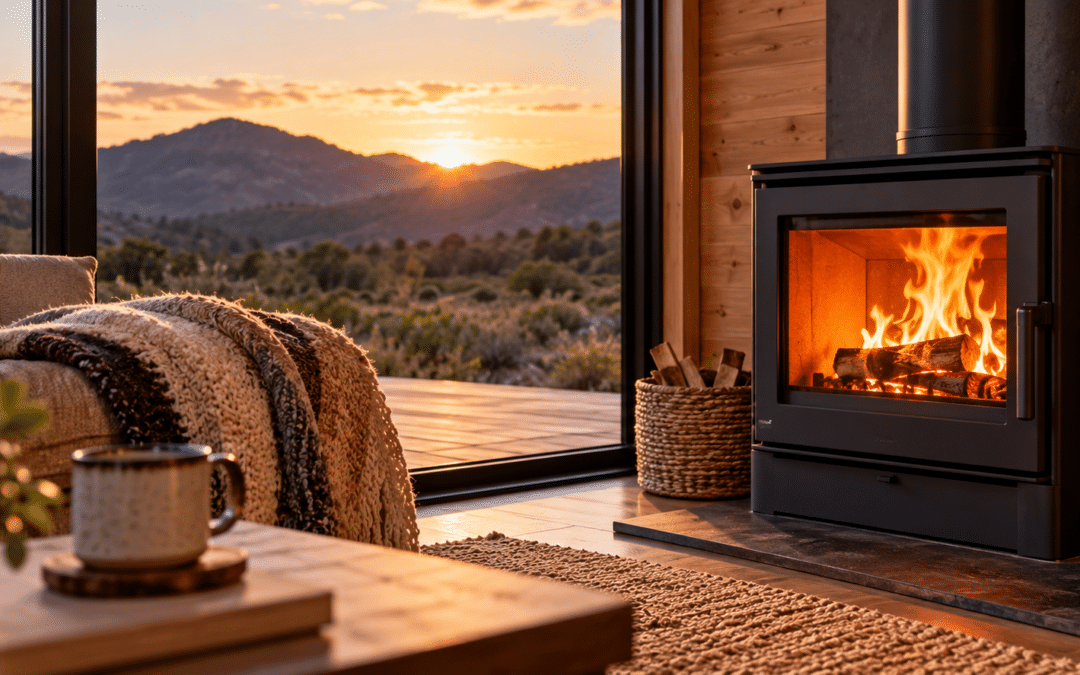
A Cosy Tiny Home: Your Guide to Using and Maintaining a Closed Combustion Fireplace
There is something magical about a crackling fire on a cold winter’s evening, especially when you’re tucked away in a beautifully designed tiny home surrounded by nature.
At Tinyhome Africa, we believe that comfort and functionality should go hand in hand. Our well-insulated tiny homes and cabins are designed for year-round living, and a closed combustion fireplace is a wonderful optional addition for those chilly winter nights.
But to get the most out of your fireplace, it’s important to understand how to use and maintain it correctly. Proper care not only ensures efficient heating but also extends the lifespan of your fireplace and keeps your home safe.
Why Choose a Closed Combustion Fireplace?
Unlike traditional open fireplaces, closed combustion fireplaces are designed to burn wood more efficiently while delivering controlled heat into your living space.
Their advantages include:
- Efficient heating: More heat is retained and transferred into your home rather than escaping straight up the chimney.
- Lower wood consumption: Efficient combustion can mean less firewood is needed to maintain a comfortable temperature.
- Controlled heat: Adjustable air controls allow you to regulate the burn rate.
- Compact design: Ideal for smaller spaces where every square metre counts.
- Off-grid comfort: A wood-burning fireplace can provide warmth without relying on electricity.
In a properly insulated tiny home, even a relatively small fireplace can provide substantial warmth. Choosing the correct fireplace size is therefore particularly important to avoid overheating your space.
1. Before Lighting Your Fireplace for the First Time
Before enjoying your first fire, take some time to familiarise yourself with your fireplace’s operating instructions.
Every closed combustion fireplace has specific requirements, and following the manufacturer’s guidelines is essential.
The First Fire: Curing the Paint
Many closed combustion fireplaces are finished with specialised high-temperature paint that needs to cure during the first few fires.
This process can produce an unusual smell and sometimes a little smoke as the coating cures.
Follow the manufacturer’s first-fire procedure carefully, which may involve gradually increasing the temperature over several smaller fires.
Ensure adequate ventilation during this process.
2. The Secret to a Good Fire: Dry, Seasoned Wood
One of the most important factors affecting your fireplace’s performance is the quality of the wood you burn.
We recommend using properly seasoned firewood with a moisture content of no more than 18%.
Wet or freshly cut wood produces less useful heat, more smoke and increased deposits inside the flue.
Over time, this can contribute to corrosion, chimney blockages and reduced heating efficiency.
Our Tips for Storing Firewood
- Purchase firewood well before winter, when supplies are generally easier to obtain.
- Allow sufficient seasoning time. Six months may be adequate for some split woods, while others require considerably longer.
- Store wood in a dry, well-ventilated area, raised off the ground.
- Cover the top of your woodpile while leaving the sides open for airflow.
- Use a moisture meter to check that your wood is ready to burn.
Never use petrol, paraffin, methylated spirits or other liquid fuels to start or maintain a fire.
3. Avoid Over-Firing Your Fireplace
It can be tempting to build a roaring fire when the temperature drops, but excessive heat can seriously damage your fireplace.
Over-firing occurs when a fireplace is operated beyond its intended temperature range.
This can cause:
- Warping or cracking of internal components.
- Damage to baffle plates and firebricks.
- Premature deterioration of the fireplace and flue system.
- Damage to nearby wall finishes, particularly heat-sensitive plaster.
- Potential invalidation of the manufacturer’s warranty.
Our advice: A steady, controlled fire is far more effective than an excessively hot one.
Follow the manufacturer’s recommended fuel loading and air-control settings.
In a well-insulated Tinyhome Africa cabin, you may find that a modest fire provides all the warmth you need.
4. Fireplace Safety in a Tiny Home
Because tiny homes have compact interiors, careful attention must be paid to fireplace placement and surrounding materials.
Closed combustion fireplaces radiate significant heat, and nearby furnishings and surfaces can become dangerously hot.
Always maintain the minimum clearances specified by the fireplace manufacturer. A general 50 cm separation should never be assumed to be sufficient, as required distances vary according to the appliance and the materials involved.
Important safety precautions include:
- Keep curtains, furniture, firewood and other combustible items away from the fireplace.
- Never leave the fireplace door open during normal operation unless the manufacturer specifically permits it.
- Use a suitable non-combustible hearth or floor protector where required.
- Install and regularly test smoke and carbon monoxide alarms.
- Never leave children or pets unattended near a hot fireplace.
- Ensure the fireplace and flue are professionally installed and correctly ventilated.
A properly installed fireplace should provide warmth and comfort without compromising the safety of your home.
5. What If Your Fireplace Starts Smoking?
A closed combustion fireplace should not regularly release smoke into your living space.
If smoke enters the room, the issue may be related to insufficient chimney draught, poor-quality firewood, a blocked flue or inadequate combustion air.
Common causes include:
- Wet or unseasoned wood.
- A cold chimney during startup.
- An obstructed or incorrectly configured flue.
- Negative air pressure inside the home.
- Wind conditions affecting chimney performance.
In some situations, adjustments to the flue height or chimney cowl may improve performance, but these should only be undertaken following a professional assessment.
Important: If smoke repeatedly enters your home, stop using the fireplace until the cause has been identified and corrected.
6. Cleaning and Maintaining Your Fireplace
A little regular maintenance goes a long way towards keeping your fireplace looking good and operating efficiently.
Caring for the Exterior Paint
Closed combustion fireplaces are typically coated with specialised high-temperature paint.
Although designed to withstand heat, this finish can be relatively soft and susceptible to scratches, moisture damage and corrosion.
To protect the finish:
- Allow the fireplace to cool completely before cleaning.
- Use a soft, dry cloth to remove dust.
- Avoid wet cloths, abrasive cleaners and harsh chemicals on painted surfaces unless specifically approved by the manufacturer.
- Follow the manufacturer’s recommendations for any paint touch-ups.
Normal paint deterioration may be excluded from the manufacturer’s warranty.
Understanding Rust Inside Your Fireplace
It is not unusual for some surface rust to develop inside a wood-burning fireplace.
During use, flames can burn away the protective coating on internal metal surfaces. When exposed metal comes into contact with moisture, oxidation may occur.
Minor surface rust does not necessarily affect the fireplace’s operation.
However, excessive corrosion, flaking metal, holes or weakened components should be inspected by a qualified technician.
Using properly seasoned wood and keeping the fireplace dry can help reduce corrosion.
Caring for Stainless Steel Flues
Despite its name, stainless steel is not completely immune to corrosion.
Coastal environments, moisture and airborne salts can all contribute to surface deterioration.
Accessible external stainless steel surfaces may be cleaned with mild soapy water, where permitted by the manufacturer, and dried thoroughly.
The inside of the flue requires specialist inspection and periodic sweeping to remove soot and creosote deposits.
Have your chimney and flue inspected and cleaned regularly, ideally before the winter heating season, or more frequently if recommended by your installer.
7. Protecting Your Fireplace Warranty
Your fireplace is an investment, and correct operation is essential to maintaining its lifespan.
Damage resulting from misuse, over-firing, burning wet wood or failing to follow maintenance instructions may not be covered under the manufacturer’s warranty.
Always retain your fireplace’s operating manual and warranty documentation.
Remember that the fireplace, flue system and surrounding building finishes may be covered by different warranties, each with its own conditions.
The Perfect Winter Retreat Starts With Good Design
At Tinyhome Africa, we design our cabins and tiny homes with comfort, insulation and efficient use of space in mind.
A carefully selected closed combustion fireplace can transform your tiny home into a warm and inviting retreat, whether you’re enjoying a mountain getaway, operating a luxury guest cabin or living off-grid.
Combined with quality insulation, thoughtful window placement and efficient heating, a fireplace can make winter one of the most enjoyable seasons in your tiny home.
Thinking of adding a fireplace to your Tinyhome Africa cabin?
Talk to us about incorporating a closed combustion fireplace into your design. We’ll help you consider the available space, heating requirements and suitable installation options.
Tinyhome Africa | Design Big. Live Small.
Website: www.tinyhome.africa
Phone: 079 479 5170
Email: tinyhomeza@gmail.com
Disclaimer: These guidelines provide general information only. Always follow the specific fireplace manufacturer’s operating, installation and maintenance instructions. Fireplace and flue installations must comply with applicable building and fire safety requirements.
Recent Comments